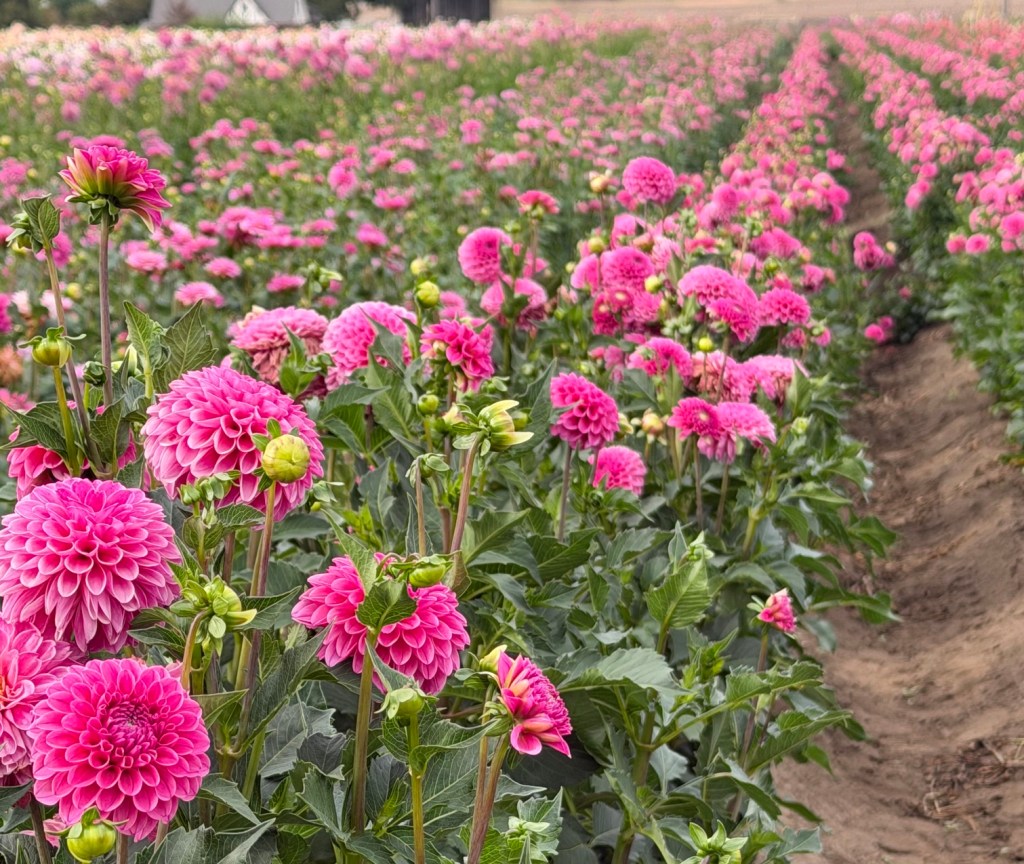
In late August I visited Swan Island Dahlias, “the largest and leading dahlia farm in the United States,” where I wandered through more than 50 acres of an astonishing variety of dahlias in full bloom. We stopped at one point to chat with two women from Europe, sharing our awe at the display. As they turned to leave I noticed the following saying on the back of one of the women’s t-shirt:
Les fleurs sont des baisers du soleil,
déposés sur la terre avec amour
which translates as
Flowers are kisses from the sun,
placed upon the earth with love
I have never since looked at a flower without thinking “kisses from the sun,” and feeling gratitude for my place in creation.
◊
In my personal faith, and in my work as a chaplain, I try to maintain a balance between a science-based mindset and mindfulness of all of the mysteries that science cannot address. Take, as one small example, flowers.
I understand, at a layperson’s level, how flowering plants evolved in prehistoric times to become the most diverse and dominant plant form on earth. They are the source of almost all plant-based food that we humans and most other large animals consume. They are the certified winners in the evolutionary processes governing plant life on earth.
I also understand, again at a layperson’s level, why flowers appear attractive to many animals. To wander through a garden in full bloom is to be surrounded by honeybees, hummingbirds, and other animals who derive their sustenance from flowers while also fulfilling the flowers’ need for pollination.
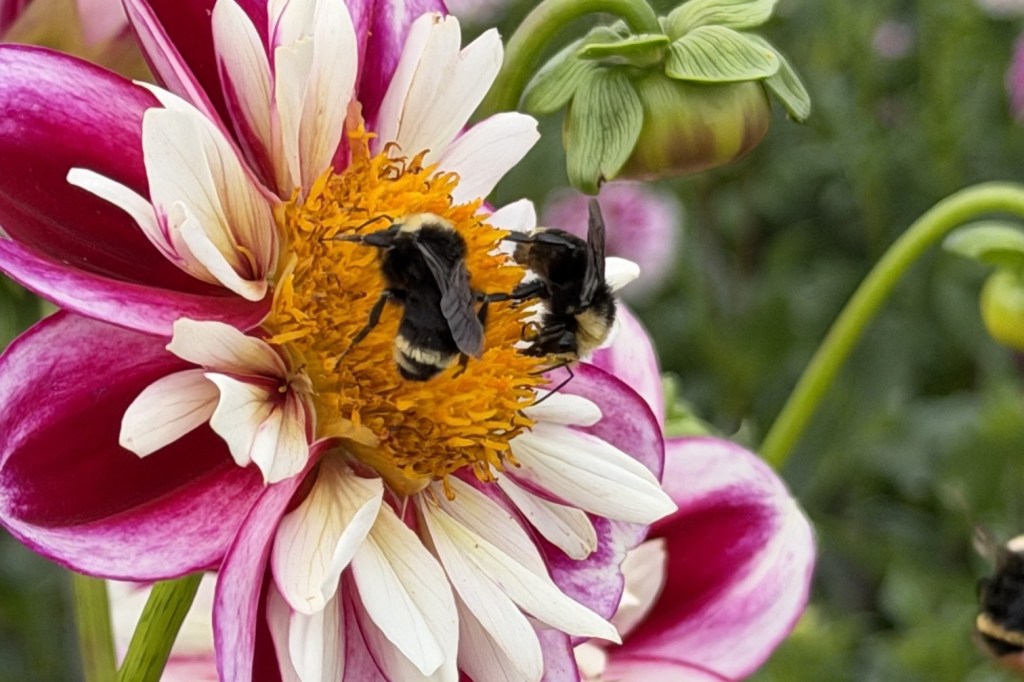
Less obvious to me is why we humans are touched so deeply by being in the presence of flowers. People began cultivating ornamental gardens at least 4,000 years ago, simply to surround themselves with beauty. When I gaze at fields of lupine and paintbrush in the mountains, or acres of cultivated dahlias, or even just a single blossom, I am filled with awe for which I find no words. My scientific mindset does nothing to explain this feeling.
“Kisses from the sun, placed upon the earth with love” is a more satisfying explanation for me. Of course, this begs the question of who is doing the kissing and placing, and that is a matter for theology. For myself, I long ago surrendered to the notion that my very existence, and the universe I exist within, are the consequence of a creative impulse of a being / force / entity far beyond my understanding. When I reflect on my existence in that universe, I feel beloved.
In my Christian faith I immerse myself in a set of narratives that makes these ideas more tangible and actionable for me, and in a community of others who do the same. But the experience of wonder and belovedness expressed in “kisses from the sun, placed upon the earth with love” extends far beyond that community. It knows no boundaries of religion, geography, or culture.
As a chaplain, I am asked by people of different faiths and of no expressed faith to offer a prayer for them, even if they often cannot articulate what prayer means for them. I usually begin, “Dear loving creator [God], thank you for the gift of your child _____,” to help them see themselves as a wonderful creation that is worthy of love—and beloved. I believe we have all have been placed upon the earth with love, and are deserving of the kisses all around us—including flowers.

