
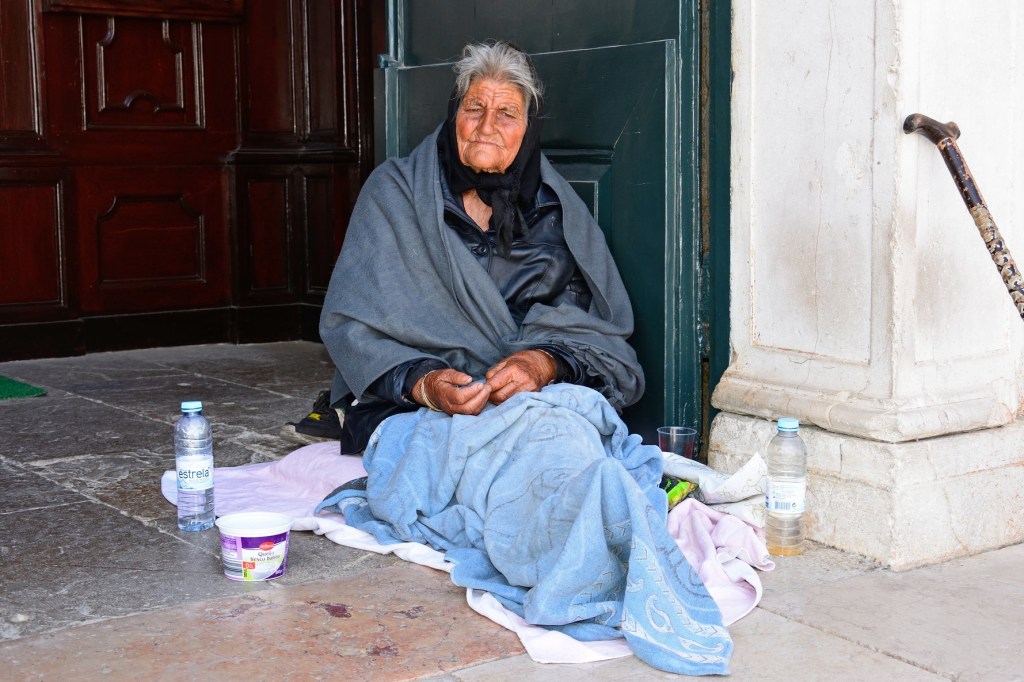
I received a referral from a social worker one morning for Lila, a woman in her fifties with advanced metastatic cancer, who was in emotional distress. She’d been living on the streets and had been found down, in severe pain, by an outreach worker. She’d been brought by ambulance to our Emergency Department, where she’d been seen many times, then admitted to our oncology unit.
“Good morning, Lila, I’m Chaplain Greg,” I begin. Through tears, she gives me a welcoming nod, and I take a seat beside her. “I understand you’re going through a really rough time. I’m so sorry …”
She nods again. “Thank you for coming. I’m really scared, and I don’t know what to do.”
“You can tell me whatever you like—I’m here to listen.”
“The doctors told me the reason I’ve been in so much pain is that my cancer is cutting off my ability to pee, and it has grown to the place where there’s no way to work around it. They said the best they can do is cut a hole in my belly and put in a stent so I can pee out of there.”
“That’s really hard, Lila.”
“I think I could deal with it if I had a place to live, but I don’t, and I can’t imagine dealing with this while living on the streets. I’m terrified just thinking about dying in a doorway somewhere in a pool of pee.”
“Who are the important people in your life? Can any of them help?”
“I’m real close with my daughter and her boyfriend, but they live in a tiny trailer and there’s no room for me. My best friend Crystal lives on the streets like me. That’s it.”
We sit in silence for a bit, then Lila continues. “I asked my doctors how long they thought I had before my cancer kills me, and they said maybe six months. I asked them how long I‘d live if I didn’t do what they recommended, and they said I’d probably die of kidney failure within five days.”
“Wow … that’s really tough, no wonder you’re struggling. What thoughts are rising for you as you think about this?”
“I’m gonna die pretty soon no matter what. I’m so afraid of going back to the streets and dying there that I’m beginning to think I’d rather just die here now—at least I’d be dry and warm. But the idea of dying so soon is really scary.”
Our conversation turns toward Lila’s thoughts about faith, what happens after we die, and what feels most important to her at end of life, whether in five days or six months. She thanks me for taking the time to talk through this, and says she wants to just sit for a while before making any decisions.
◊
Decisions like the one confronting Lila are among the most difficult we ever face, and as medical science advances they are becoming more common. Many people never face such a decision—they die suddenly and unexpectedly from accidents, overdoses, heart attacks, aneurysms, etc. Those suffering from terminal cancer or other progressive fatal diseases, however, are often presented with treatment options intended to extend lifespan, but which may also diminish the quality of the life that remains.
In navigating such care decisions, dignity must always remain at the center. What “dignity” means can depend on the individual and their situation, but most people have clear ideas about what it means to them, and they value it highly. Wikipedia defines dignity as “the right of a person to be valued and respected for their own sake.” It is not one consideration among many, it is a core human right. Treating someone with dignity involves two other interconnected ideas: the Golden Rule—treat others as you would want to be treated—and agency, the ability to choose one’s own course of action.[1]
When making complex decisions about medical care, it can be difficult to discern one’s own wishes amidst the many, sometimes conflicting, opinions offered by others. Doctors and other care providers might not agree among themselves, and family members or friends may express preferences that might or might not align with medical advice. In offering these opinions, even those with good intentions might be strongly influenced by their own interests or values, without adequate consideration of the patient’s.
It can sometimes be helpful to ask, “What would you do if you were in my situation?” (the Golden Rule), and perhaps to follow up by asking why they came to their conclusion. No two people are exactly alike, and it’s impossible for one person to put themselves in another person’s shoes, but an honest exchange regarding these questions can provide helpful perspective for the one facing a difficult decision. In the end, though, the decision belongs to the patient, and treating them with dignity requires respecting their decision even if it’s different than what someone might choose for themselves.
This is rarely more difficult, or more important, than when making decisions regarding end of life. “Death with Dignity” can be a polarizing term, as it is often associated with other problematic phrases such as “physician-assisted suicide.” But for me, it means each person having the right to choose a course of treatment for themselves at end of life that aligns with their values and preferences, and to have their wishes be respected by others. Despite the many complex issues surrounding this topic, I believe the desire for dignity at end of life is universal.[2]
◊
Two days after my first visit with Lila, I am once again assigned to the oncology unit. I see that she is still there, and that her status has changed to “Comfort Care.” I stop in to see how she is doing, and find her accompanied by two women. Her complexion is a bit ashen, and at first she doesn’t recognize me, but then she brightens suddenly.
“Hi, Chaplain, thanks so much for coming by.” She gestures toward the women. “This is my daughter Destiny, and my best friend Crystal.”
“It’s so good to see you, Lila,” I respond, “and to see you surrounded by people who love you.” I turn toward the women. “Thanks so much for being here.” They nod and smile through tears.
“I appreciate the time you spent with me the other day,” Lila says, then she pauses, catching her breath. “This is what I wanted. It means so much to have them with me now. And everyone here is so kind and caring.”
“Then I’ll leave you all to your time together. I’m so grateful to see you comfortable and content. I’ll keep you in my prayers.”
Lila died the following day.
[1] See the Wikipedia article “Dignity” for a wide-ranging consideration of the term. In particular, “in 2008, The President’s Council on Bioethics concluded, ‘there is no universal agreement on the meaning of the term, human dignity.’”
[2] I consider “Medical Aid in Dying” (my preferred term) to be a relatively small (but important) subset of “Death with Dignity.” I plan to address it in future posts.


Once again an excellent article. It fits my state of life appropriately.
Love, Bruce
LikeLike