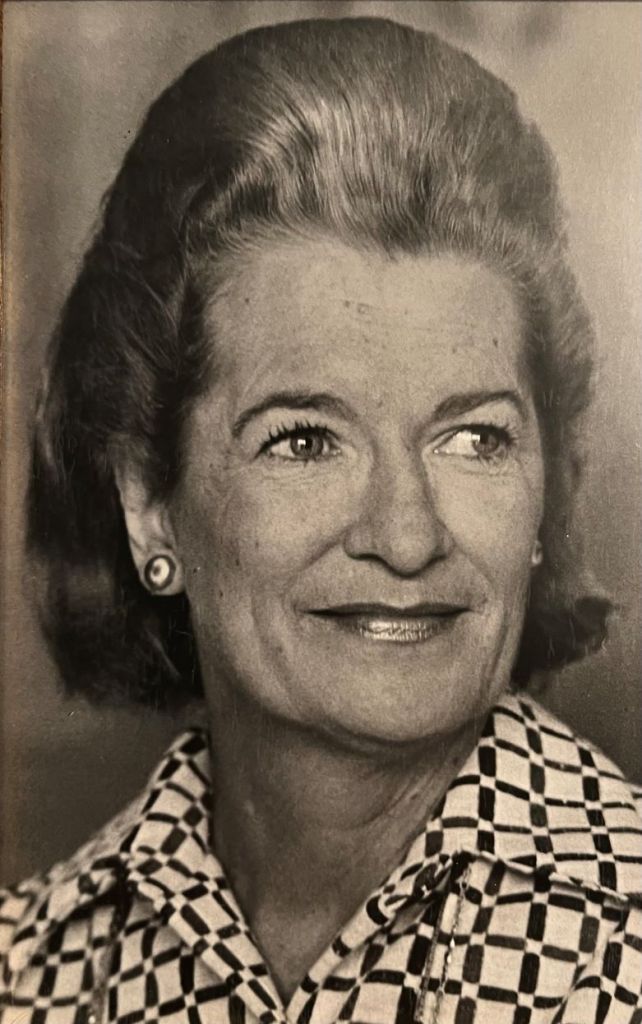
Pat’s Final Gift

I always find it interesting to ask other chaplains about what led them into this work.  It is, after all, a distinctive calling, one many people think they are not well suited for.  Chaplains often have an “origin story” or two that they can identify, in retrospect, as pivotal to their journey.  Here is one such story.

Pat was the daughter of Irish immigrants who grew up in the Jackson Heights neighborhood of Queens, in New York City.  During World War II she met Jack, a young Navy officer from the Midwest, at a USO dance.  She succumbed to his charms despite their religious differences—she a Roman Catholic, he aligned with the spirituality of Ralph Waldo Emerson—but they agreed that their children would be raised in the Catholic Church.  And so the children were, all six of them, but they came of age in the 1960s and their religious upbringing was far from smooth.

When the younger son, Greg, neared middle school, he was pulled from the parochial system that was generating conflict with the older children and placed in a secular school.  Soon he lobbied his mother to be released from obligations to attend Mass and catechism classes, repeating the criticisms of the Church he’d heard from his siblings.  She insisted on a series of debates regarding religion, challenging the platitudes Greg spouted and pushing him to think substantively about matters of faith.  When she was finally convinced, she released him with this admonition: “I’ve never confused the Catholic Church with Jesus Christ, and you shouldn’t either.  Don’t throw the baby out with the bath water.”

After Greg’s sophomore year in college, Pat travelled to New York for the ordination of a nephew as a Jesuit priest.  She struggled with shortness of breath and weakness during the trip, and upon her return was diagnosed with advanced lung cancer and heart disease.  After considering the options available in 1975, she declined treatment, accepting the prognosis that she had less than six months to live and choosing to make the most of it at home among family and friends.  She and Greg, who was living on the other side of the country, resumed their discussions about religion by phone, and she impressed him deeply with her faith, her courage facing death, and her gratitude for what life had given her.

Greg traveled home to see her as soon as he could, but she declined suddenly during his trip and was on her deathbed when he arrived.  After a time at her bedside, holding her hand and saying his goodbyes, he took his place with his father and other siblings around her bed.  He remembered thinking, “It’s amazing to see such confidence in her final moments.  I wish I could believe what she believes—that she will soon be face-to-face with Jesus—because it’s so powerful for her right now, but I just can’t imagine believing any of that.”  Pat died a few hours later.

It took Greg years to process this experience—especially the full meaning of losing his mother—but on that day death was transformed from an abstract notion to a concrete reality.  Thanks to Pat’s example, he came to understand that mortality is something one can not only accept but embrace, that acknowledging the finite time one has to live can open the door to candid, meaningful conversations, and that the best way to go through the experience of death is in the company of loved ones.  This gave Greg the foundation for accompanying others through their own experiences of the death of loved ones, first with family and friends, and, later, with patients as a chaplain.

In writing Elder Chaplain stories, I change many patient identifiers—name, age, diagnosis, even gender or race—to protect patient confidentiality, while still seeking to capture the essence of our encounter.  I have no need to do so in this post.  Pat was my mother, and this is my story.

I decided Pat’s story needed telling because it is both extraordinary and ordinary.  It is extraordinary in that stories like this were far too rare in in America in 1975.  In the years following World War II, death—and childbirth—became increasingly medicalized, taking place primarily in institutions, and attended to more by medical professionals than family members.  The idea of hospice was not introduced in the US until 1971, and it was a foreign concept to those treating Pat in 1975.  Still, she chose that approach for her own death—without today’s more effective pain management—and it was a gift to all of us in her family to experience her death at home, by her bedside.

As I reflect on why Pat embraced this approach, one factor surely was On Death and Dying, the 1969 book by Elisabeth Kübler-Ross, MD, that introduced the now-familiar stages of grief:  denial, anger, bargaining, depression and acceptance.  My sister was in nursing school in the early 1970s, when the book was required reading; my mom decided to read it with her, and I joined in as well.  When she received her diagnosis three years later, I think this book gave her the framework she needed to argue back to her doctors, who were still of the mindset to treat at all costs.  More importantly, for me, it gave us shared language to talk about her experiences approaching death.  I still have her yellowed copy of the book—her signature inside the cover is the only thing written in her hand that remains with me today.

Now, almost 50 years after Pat’s death, dying at home with supportive hospice care is no longer extraordinary.  The use of advance directives outlining one’s wishes for end-of-life care is now more widespread, and hospitals regularly conduct multi-disciplinary “goals of care” conferences with patients and families (and chaplains, if desired) to discuss options for treating advanced illness—including no further curative treatment at all.  Patients increasingly understand that such life-and-death decisions are theirs to make, not their doctors.  It remains a struggle for some elderly folks—who formed their attitudes about aging and death in the 1950s and ‘60s and often equate hospice with “giving up on life”—but we have come a long way toward Pat’s story becoming ordinary.

Still, if “normalizing” death—giving people as much agency as possible to dictate the setting and circumstances of their own deaths—is a goal we seek for ourselves, then we also need to normalize the work of accompanying others in the process of aging and dying.  I often hear statements such as, “I could never do what you do—I would find it too depressing.”  While I grant that a steady diet of this work is not for everyone, the work of accompaniment shouldn’t be delegated to chaplains any more than decisions surrounding end of life should be delegated to doctors.  My hope for Elder Chaplain is that it helps all of us become more comfortable, skilled, and experienced with this work.

Fortunately, nowadays I see many more people like Pat making thoughtful, courageous, and spirit-filled choices to face end-of-life on their terms—and, in doing so, providing gifts to their family members like Pat gave us.  It is my hope that they are not only planting the seeds of future chaplains, but also building “chaplaincy attitude” in all with whom they engage, so that as a society we can reclaim the skills we once had before the medicalization of death.

Aunt Julia

When I arrive in the surgery prep area, I find Julia, a black woman in her late 70s, sitting upright on her gurney, legs spread in front of her under a blanket, with a despondent look on her face.  I greet her and confirm she’d requested a chaplain visit; she looks at me, nods, then stares away again.

“Nobody seems to care about me.  Nobody here, nobody anywhere, nobody but Jesus.”  I look at her as compassionately as I can, but I say nothing.

“I’ve got four sons but two of them are dead, the other two got their own health problems.  I don’t want to bother them with mine—that’ll just make their problems worse.”

“I’m sorry, Julia.  That’s really hard to have lost two sons—it’s not supposed to be that way.”

“No, it’s not.  And I’ve been let down by my church, too.  People I thought were friends, pastors—I tell them what’s on my heart and it turns into gossip.  No, I got nobody to listen to me.”

“Well, Julia, that’s why I’m here.  Let me grab a chair.  I can sit and listen until it’s time for your procedure.”

When I return, her face brightens a bit and she stares into my eyes intently.

“Jesus is my rock.  Without him I wouldn’t have anything.”

“Jesus is my rock, too,” I reply, “but we need other people, too, to listen to our stories.”

“Yes, we do,” she affirms, then takes my hand and begins sharing from her heart.  Born in rural Georgia with a club foot that left her with a limp, leading other children to ridicule her.  Being labeled the “black sheep” among her “perfect” siblings, ultimately being disowned by her father.  Making her way west, working hard, bearing children, finding purpose but also heartbreak.

“But through it all,” she sums up, “Jesus was always there, telling me I’m not alone, telling me he’s got my back.  That’s something no human could ever do.”  She pauses.  “I’ve got a song on my heart today—Precious Lord—do you know it?”

I smile broadly.  “Julia, we just sang that at my church yesterday.”  She wraps both of my hands in hers and begins to sing, and I join in.

Precious Lord, take my hand
Lead me on, let me stand
I am tired, I am weak, I am worn
Through the storm, through the night
Lead me on to the light
Take my hand precious Lord, lead me home

When I look up, her eyes are brimming with tears.  “You are God’s way of telling me that I am not alone today, that he’s still got my back.  Thank you so much for coming to see me.”

My heart swells, too.  “You are a gift to me as well, Julia.  I’m so blessed that you asked me to come visit you today.”

“I’m Aunt Julia to you now, honey—that’s what everyone who knows my heart calls me.”

Contrary to commonly held notions, many chaplaincy encounters—maybe most—do not explicitly involve religion.  Looking back over previous Elder Chaplain posts, the majority consist of simply being present with people experiencing stress or loss, giving them space to speak freely and authentically, and validating their condition and their humanity.  I find joy in meeting people wherever they may be, and using the language and frameworks they are most comfortable with to bring them solace and hope.

But often religious faith and practice are central to a chaplaincy encounter, because these are what many people turn to in times of stress or loss.  They seek comfort in the cadences of familiar psalms or prayers, finding strength in feeling connected to something greater than themselves.  People of many faiths believe in the efficacy of prayer as a means of drawing the divine closer and invoking their protection in the face of uncertainty and vulnerability.  “I’ve got lots of friends praying for me, but there’s no such thing as too much prayer” is a common refrain I hear.  So I ask them about their faith traditions and what prayer means to them, then I offer prayers aligned with their faith and concerns.  I always invite them to add prayers of their own, but they usually reply, “What you said was all I need—thanks.”

Less frequently, I encounter someone like Julia, for whom a relationship with the divine is central to their identity and to their way of seeing and engaging with the world—as it is for me.  They speak of being called personally by God to follow the precepts of their religious tradition.  A Hindu woman told me, “God slapped me across the face and told me to wake up.”  Julia told me, “Jesus said, ‘Julia, you are mine.’”  I have felt that call, too, and when I validate the reality of their call, the conversation moves to a yet-deeper level.  The shared experience of such a call can bridge religion, race, culture, gender, time, and everything else that separates one human being from another.

Joining voices together in song or chants is part of almost every religious and cultural tradition because, among other reasons, it creates a sense of unity among the participants.  It was a special gift that the song on Julia’s heart was one I know and love well.  “Precious Lord” is a gospel song written in the 1930s (full lyrics here) that was Dr. Martin Luther King, Jr.’s favorite song, often sung at civil rights rallies.  He asked that it be sung at his funeral, and Mahalia Jackson did so; Aretha Franklin sang it at Mahalia’s four years later.

When Julia and I joined our voices together in the humble, curtained-off space in the pre-surgery unit, we did not ascend to the heights of these singers, but the unity it created between us in that moment could not have been more powerful.  The memories and images that “I am tired, I am weak, I am worn” conjures up for Julia are doubtless vastly different than those it conjures up for me, but these feelings are universal to the human experience, and to share them in song is to feel fully connected to one another.  Such connection is a rare and elusive experience, but few things can do more to give us hope and strength for what is to come.

What It’s Like

Laverne, a woman in her 90s, was chatting with her daughter Bonnie when I checked in on her one morning.  She’d recovered well from the pneumonia that had landed her in the hospital, and she was expecting to discharge back to her independent living apartment later that day. 

Laverne greets me warmly, remembering our previous visits, and introduces me to Bonnie.

“Bonnie flew all the way from New York to make sure I was OK, and to help me get settled back in to my apartment.  She’s a famous mystery writer!”

“That’s wonderful!  I don’t mean to interrupt your conversation, I just wanted to offer my good wishes for your transition home.”

“No, please join us,” Laverne requests, pointing to an empty chair.  “We were talking about whether I’ll be making the trip down to Arizona to spend the winter at my condo there.  I’ve spent every winter there for the past 25 years, but I haven’t decided whether I’m going this year.”

“Mom,” Bonnie interjects, “I think you’re just tired from being in here.  A few days of rest at home and you’ll feel better, and once you’re down in Arizona you’ll be glad you went.”

“I don’t know, it feels like a lot of work.  And I’ve been thinking about this since before I got sick.  I think I might actually enjoy spending the winter up here.  Like I said, I haven’t decided yet.”

Bonnie presses on.  “You’re getting around well, even without your walker.  You can get all the help you need during the trip.  I’m sure it will go smoothly.”

Laverne fixes Bonnie with a firm glance.  “You have no idea what it’s like to live in this body.”

“No, but your mind is sharp, and from what you’ve told me you shouldn’t have trouble making the trip.”

“You have no idea what I haven’t told you.”  Silence descends, and both Laverne’s and Bonnie’s eyes brim with tears.

After letting the silence settle for a moment, I gently probe.  “Laverne, is there anything you’d like to share about what it’s like to live in your body?”

She draws in her breath.  “My mind’s still sharp all right, the problem is … this thing,” she says, gesturing with both hands up and down the length of her body.  “It doesn’t work anymore, and it’s exhausting to live in it.” 

Bonnie’s face softens as she listens intently, and Laverne resumes.  “I guess I’ve got one of those bodies that just keeps on living, but I’m so tired.  I’ve made arrangements to move to assisted living when I need it, and to skilled nursing after that, but I’d be perfectly happy if I didn’t wake up tomorrow morning.”

Bonnie startles, and Laverne reassures her.  “Don’t worry, I’d never take my own life.  Besides, even that feels like too much work right now.  I’m content just taking each day as it comes, not making plans beyond the next day.  That’s why I can’t even think about Arizona.”

With the tension broken, I thank Laverne for her heartfelt sharing and leave mother and daughter to carry on from there.

“I know how you feel.”

This unfortunate saying often emerges after someone shares from their heart.  We mean well—we want the other person to feel understood, we want to establish common ground.  But the honest response, if the feelings are complex, is “No, you don’t”—our personalities and experiences are too unique for anyone to know what life feels like for another person.  Many might hesitate to respond so bluntly, but Laverne, at least with Bonnie, did not, and her “You have no idea” responses moved the conversation to a new and helpful level of candor.

“I know how you feel,” or its equivalent, can be such a reflexive response that it flies out of our mouths without thinking.  However, it often has the opposite of our intended effect:  the person does not feel listened to, and it can shut down any further desire to share their feelings.  We often compound this error by sharing experiences of our own that we see as similar, but this usually just reveals how much our experience differs from theirs.  Worse, it turns the focus of attention from their sharing to our own—the ultimate invalidation.

Due to my own bad habits in this regard, I’ve had to work very intentionally to let go of “I know how you feel”—with friends and family as well as patients—and instead invite them to tell me more about how they feel, in their own words.  For people seeking to be understood, this invitation is more validating than anything we could share from our own experience.  Once someone feels well listened to, sharing a related experience might be helpful indeed, but until then it takes things in the wrong direction.

Rewiring these impulses has been among my greatest challenges in becoming a chaplain, but also among my most valuable learnings for work and life.  My new habits get reinforced regularly as I engage with people about whom I could never say “I know how you feel.”  People suffering the effects of a stroke, relearning how to speak or walk.  People living on the streets, struggling with addiction.  People hearing the news that they have at most a few days to live.  The best thing I can do for them is give them the chance to share what it’s like from their perspective.  And I learn so much from what I hear …

Which is a good thing, because while I may never have to deal with any of these particular situations, I am certainly growing older.  I’m just beginning to get a sense of how it feels to live in an older body, so I treasure hearing about what it’s like from people like Laverne.  I have been blessed many times by wise elders sharing their perspectives as they near end of life, and I eagerly seek out as many of these conversations as I can.  What they have to tell us isn’t always easy to hear, but they help me make sense of my own aging process, and I leave each conversation feeling a little bit better prepared for the journey ahead.

Elder Chaplain Turns 1

Actually, I recently turned 68, but that’s not the point I want to make today …

One year ago I launched Elder Chaplain with this post, having no idea where it would go or how long it would last.  Much to my surprise, this current post is my 28th, and I don’t see things slowing down much over the coming year.  There are a few factors I see as contributing to this.

First and foremost are the patients I’ve been blessed to engage with.  I already knew from experience how unique each patient is—a singular persona intersecting with a singular set of circumstances.  Still, in the process of committing their stories into writing, the idiosyncratic nature of each individual becomes all the more evident.  The variety of human nature and experience seems truly infinite, and endlessly fascinating.  Every day I serve as chaplain, I meet people and hear stories that are unlike anything I have ever known.  The stories write themselves, and no two are even close to the same.

I think it’s also true that whatever stresses send a person to the hospital often bring out their truest and most beautiful selves.  In this setting, it’s no longer possible to maintain the superficial front we often present to the world.  Things are NOT fine, and thoughts and stories that often remain buried come to the surface.  Even the simplest affirmation of these can give a person the permission they may need to inhabit their authentic selves fully.  There are few things more powerful to experience, as a chaplain or a reader, than another human at their most fully authentic.

I write, as much as anything, because that is how I can best understand and process these extraordinary encounters.  When engaged with a patient, it’s not possible (or desirable) to flip into observer mode—fully committed presence is essential.  Only when I get back to my office, or on my way home, do I have the space to ask, “What just happened?”  I find it so helpful to re-immerse myself in the setting with the patient and let the dialogue—and the emotions—rise once again, and put it into writing.  Then, and only then, can I reflect on the full encounter and try to articulate the lessons lying within it.

I keep writing, too, because you tell me that these stories matter to you.  Some say they help them normalize the complex, difficult feelings we have around suffering and loss.  Some say they have made them more compassionate in how they interact with strangers.  One reader commented, “Patients like Clark are teaching me so much!”  It’s so rewarding to share these beautiful people with you.  Another commented, “Thanks for taking me along on your journey and enriching my own.”  This is the essence of accompanying each other through life, and it is the spirit I aim to foster with this blog.

Most readers, I know, remain silent, and I embrace that, too.  I had lunch with a friend last week and Elder Chaplain arose during our conversation.  She said, “I read each post when it arrives, but I’m just not the commenting type.”  In my theology, my job is to honor the patient and to try to capture the movement of the Spirit within the patient, within me, and within the encounter.  When I hit “Publish,” my work is done, and I need to trust in you—and in the work of the Spirit within you—to do with it what you will.

Quite a few have suggested that I should put these together into a book.  I suppose that could happen someday, but I can’t think about that now.  Maybe I’m just too close to it, but I can’t see any overarching themes emerging, and looking for them isn’t a priority for me now.  I find myself content to let each story stand on its own, to take what each has to offer, and to keep walking down the path toward more.  I don’t know where this journey is leading, but I feel deeply accompanied by many, including my patients, my fellow chaplains, all who read Elder Chaplain—and, most of all, by the Spirit that animates us and connects us to each other.  And that is all I need to keep going …

If you aren’t already a subscriber to Elder Chaplain, I invite you to become one.  Just enter your email address and click the “Subscribe” button near the top right of any page, and you will receive an email containing a post whenever I publish one.  Free forever! Your accompaniment is greatly treasured!

No Words

My supervisor poked his head into the office and said, “We’ve got a tough one down in the ER.  It would be good to have two of us … will you join me?”  As we walked, he shared what little he knew. 

A 39-year-old woman had been found unconscious by her daughter.  An ambulance had just arrived with mother and daughter.  The father had been called and was on his way.  The parents spoke only Spanish, so a medical translator on staff had been alerted.

We entered to find the mother intubated, with the ER team performing chest compressions.  The father had arrived and was standing to the side with his daughter, watching helplessly.  An ER staff member introduced us to them and guided all of us into a small room nearby to gather basic facts.

The daughter, Aracely, spoke English well.  She toggled between languages as she explained to us and to her father what had happened.  She and her mother, Maria, cleaned houses together, and had been working in different parts of a large home.  She called out to her mother for something, and when there was no response she called her cell.  There was no answer, so she went looking and found her on the floor of the bathroom she’d been cleaning.  Aracely thought Maria might have been there for a few minutes before she found her.

The other chaplain spoke Spanish, so he tended to the father, Juan, and I engaged with Aracely in English.  While teary, she remained remarkably composed, focusing on the family members who needed to be notified.  She had one sibling, a younger brother still in high school; she decided to hold off on contacting him until they knew more.  She placed a call to her uncle, Juan’s brother, who she knew would be a great support.

There was a knock on the door, and an ER doctor and translator entered.  The doctor explained, through the translator, that Maria had had a severe heart attack and also had brain damage from lack of oxygen.  She said Maria’s heart was still pumping and her blood oxygen levels were adequate, but she did not think Maria had a significant chance of ever regaining consciousness or of being able to breathe on her own if taken off the respirator. 

Juan asked what caused the heart attack—how this could be possible, she was only 39?  The doctor compassionately explained that she didn’t know, that this can happen for a variety of reasons, but none of that would change Maria’s status.  With great sadness, Juan gave permission to withdraw life support.

We all returned to the room where the team was caring for Maria.  At the doctor’s direction, they ceased their routine, made room for Juan and Aracely to come to Maria’s side, and stood reverently as they bade her farewell.  The staff then removed Maria’s respirator and, as expected, she died peacefully.

Juan went outside to the ambulance bay to make calls, and my supervisor motioned for me to follow him.  I stood at a respectful distance, with a cold wind blowing through my shirt, and listened as he poured his heart out to loved ones.  I speak only a few words of Spanish, but the language of grief is universal.

Juan finally turned toward me as if to come back inside.  I have rarely felt more at a loss for words, but words were not what Juan was seeking.  He walked straight into my open arms and let me absorb his weight while he sobbed uncontrollably for a couple of minutes.  When he was finally ready to let go, he simply turned and walked back into the ER.  No words.

In my experience, people often avoid engaging directly with someone who is suffering because “I wouldn’t know what to say.”  They think that “someone who is good at this”—a therapist, a pastor, a chaplain—would know the right words to say to ease the person’s suffering, but that they themselves don’t know those words.  They fear that, in their discomfort, they might say something wrong and only make the person’s suffering worse. 

So they decide to send a card instead, and browse the card rack, hoping once again that someone else will have the right words.  Eventually they find something that comes close enough to expressing their feelings, perhaps add a “Thinking of you …” and send it off.

I don’t mean to belittle this process—God knows I’ve done it many times myself.  But so often we can do better.  Most of us have been on the receiving end of such cards, and we know what that can feel like.  “Well, it’s nice that they sent something,” we think, or “I’m not sure I could bear to be with this person right now anyway.”  But sometimes we think, “I would love to have this person by my side, or talk to them, but I’m too depleted to initiate something myself.”  And an opportunity for caring is lost …

When someone who is suffering longs for your presence, they aren’t looking for a person with the right words.  They are looking for you, the authentic you, whom they love and appreciate for exactly who you are, not the Hallmark version of yourself.  Your fear of saying the wrong thing might not be misplaced, but there is a solution right at hand:  say very few words, and let your presence speak for you.  Words may come, from the other person or from you, but if they don’t, trust the silence.  There may simply be no words adequate to express the emotions being felt.

Several years ago, a young man named Griffin, just out of college, who had grown up in my Quaker meeting and was beloved by all, died suddenly from an undetected heart defect.  Many of us quickly gathered at the meeting house, mostly in silence, but after a bit people shared precious memories of Griffin, and their shock and grief at losing him.  When the time felt right, our youth pastor rose.  “If we’re ready, I’ll say a few words to close our time together.” He began, “Dear God …” then stood silently for a full minute.  Finally, he said, “There just are no words.”  I thought it was the most authentic prayer possible in that situation, and perhaps the only helpful thing he could have said.

As I stood in the ambulance bay with Juan as he made his calls, I felt discomfort at the language barrier between us, wishing I knew enough Spanish to say a few appropriate words.  Then I remembered the experience with Griffin’s death—sometimes, there just are no words.  And that’s OK.  Compassionate presence alone may be the most powerful gift we have to offer.

Strangers on a Train

One evening several years ago I was seated on the MAX Orange Line headed out of downtown.  I could not keep from overhearing a conversation between two men seated in the row behind me.

What’s with the coloring books?

I like coloring books.  I’ve just started getting back into them.

I like coloring books, too.  They’re cool.

The cool part for me is that I get to share them with my daughter.  I couldn’t see her for a long time because I was using heroin.  Now that I’ve been clean for two years, I get to see her again and we like doing coloring books together.

That’s cool.  I do heroin sometimes, it feels good but it’s not like it’s the best thing ever.

Good that it hasn’t hooked you.  For 99% of people, it’s “Hello, I just found the new love of my life.”  Please don’t do heroin again.

You homeless?

Yeah.  I’m staying tonight at the shelter near 17th & Holgate.

I’m homeless, too.  I’m staying at a place in Milwaukie tonight.

So, I was serious.  Please don’t ever do heroin again.

I don’t do it much, mostly just when I have been drinking and think, “Why the hell not?”

That’s when people die.  Alcohol and heroin are deadly together.  I almost died several times.

Yeah, I died a couple of times, but they brought me back.

Well, don’t keep pushing your luck.  And there’s worse things than dying.  Do you have any brothers or sisters?

Yeah, I got a brother three years younger than me.

Well, I’ve got younger brothers, too, and they won’t see me anymore because I was a junkie.  Why should they look up to a junkie?  Having little brothers that won’t see you is worse than dying.  Please don’t do heroin again.

I’ll think about it.

Listen, I’ve got to get off at this stop, but promise me you won’t do it again.  It will be the best decision you ever make.

As we pull into my station, the second man rises and steps in front of me to exit the train.  His arms are laden with grocery sacks holding his belongings.  I feel a nudge and, without pausing to reflect, I tap the man on the shoulder.

“I just wanted to say that I couldn’t help overhearing your conversation on the train.  I wanted to tell you that you were doing really good work back there.  I really admire you.”

“Thanks, man,” he responds.  His eyes quickly well with tears.  “Can I ask you a question?”

“Sure.”

“Do you know God?”

“Umm … that depends on what you mean, but I think … yes.”

“Would you be willing to pray for me?”

“Absolutely.  How would you like me to pray for you?”

“It’s complicated …”  He trails off, begins crying more profusely.  “Do you have a minute?  Could we sit on the bench here?”

“Sure.  I’m not in a hurry.”  We sit.

“It’s like … my Dad, he lives in Africa now, I haven’t seen him in years, and I just learned he’s got cancer bad …”

“That’s really hard news …”

“It is, but …”  He stops, cocks his head, and hears a train going in the other direction approaching the platform.  “Listen, I have to catch this train, ‘cause I should’ve gotten off at the last stop … what I really want you to pray for is my girlfriend and her daughters … my daughters … they are in a really bad place right now.  Really bad.  Her name is Melissa …”

“And your name is …”

“Brian.”

“Brian, I will pray for Melissa, and for your daughters, and for your dad … and for you, Brian.  I will hold you all in my heart, and in God’s light.”

“Thanks, man—that really means a lot.”

I pat Brian on the arm, and he steps onto the train with his bags.  The doors close, and he disappears into the night.

At the time of this story, I’d taken a leave of absence from seminary to return to full-time work, and I didn’t know when or if I would return.  As the train pulled out, I sat back down on the bench and tried to absorb what had transpired.  I’d only meant to offer encouragement, but instead I was challenged to step into a role for which I felt totally unprepared.  Having opened the door, I had to step through and trust that I could be what was needed in the situation.  As I got up from the bench, I had a deep sense that something sacred had happened, and that I needed to return to seminary to explore further.

I understand this story now as my first experience of chaplaincy.  It came to me fully formed, with all the hallmarks I now recognize.  Compassionate presence with a person in need.  Active listening to what is on their heart.  Simple words acknowledging their pain and offering wishes for healing.  No knowledge of how the story continues, just a sense that the conversation serves a higher purpose.

For me, this story abounds with questions about how God acts in the world.  What brought these three strangers together on that train?  What spirit led Brian to minister so profoundly to the other man, especially given the pain of his own struggles?  What spirit nudged me to reach out to Brian, that we each might offer the other something we deeply needed?  I don’t think of God as a master puppeteer, but I do believe God’s desire for our healing is so powerful that we can sometimes hear it—if we only listen.

Can You Show Me How to Pray?

Tara, in her 30s, requested that a chaplain visit her in her locked psych hold room in our Emergency Department.  She’d attempted suicide twice that week, and was undergoing evaluation for inpatient placement.  Her room has nothing in it besides a simple bed, so I wheel in a small stool and sit down beside her, as she sits cross-legged on her bed.  The tears flow immediately.

“Thanks for coming, I know there are probably lots of other people in the hospital who deserve your time more than me.  I just want you to know that I’m not as bad as everyone says I am.  I’ve done a lot of bad things, things I regret, but not everything they say about me is true.”

“Tara, I don’t know what other people have said, and I don’t need to.  I’m here just to listen to you.”

“Well, I actually wanted to talk to you about my mom.  I haven’t seen her in a long time—maybe 10 years—and I don’t even know how to find her.  But I’m worried that she’s not in a good place.  It’s the same thing with my sister.  I worry about them so much.”

“It’s really hard when you’re worried about someone you love and you feel there is nothing you can do.”

“I mean, my mom was not a good mom.  She abused me and did other terrible things to me, and I got put into foster care.  So I was really bad back to her, and to my sister, and to everyone else around me.”

“Sounds like you were angry with her.”

“Really angry.  But now I realize that the family she grew up in was terrible, too, maybe even worse than mine.  And now I feel really bad for her.  It’s like, I don’t think she wanted to be that way—just like I don’t want to be this way—but she didn’t know any different.  I wish she could know that I understand this now, and that I feel sorry for her and forgive her.”

“Tara, your heart is so huge and filled with love.  It’s incredibly difficult, after all the hurt you’ve known, to want to show understanding and love back in return. I’m really moved.”

“The other night, when I was up on the bridge, staring at the water, getting ready to jump, I realized I didn’t want this to be how everyone remembered me.  I want people to know that, despite all of the bad things I’ve done, I have a good heart.  But now I don’t know how they’ll ever know that.”

“I don’t know, either, Tara.  Sometimes, it seems, there’s nothing we can do but pray.”

“I’ve been wondering about that.  What does it even mean to pray?  Do you have to believe in God? I’m not sure I do.”

“That depends on who you ask, but for me, it can be as simple as focusing on what’s on your heart—like your mom—and sending your love and concerns out into the universe.  We may never know how it’s received or if it makes a difference, but just putting out that positive energy can feel like a good thing.”

“Can you show me how to pray?”

“Sure …” I say, and I take her hand and settle into silence.  “Dear God, thanks for being right here in this little room with Tara and me.  Help her to feel your love, to know that she is your beloved daughter, that you are always with her.  You have listened to her pain, and to her love and longing for her mom.  Please help her mom to feel your love, and Tara’s love, wherever she may be, and bring peace and healing to both of their hearts.”

“And God, please do the same thing for my sister,” Tara adds.  “I miss her so much, and I want her to know I love her.”

We open our eyes and look at each other, and I say, “And that’s how it works.  You just did it—you added your own prayer—and it was beautiful.”

“It’s different when you think about God as being down here, in a room like this.  Everybody talks about God being ‘up there,’ but I’ve always thought, what good is a God that doesn’t understand what it’s like down here—how hard it is down here.”

“Well, there are many wonderful faiths, but one reason I’m a Christian is that Jesus really knew how hard it is down here—he lived a hard life, and suffered a lot of cruelty, and despite that he never lost his capacity to love.  You haven’t lost your capacity to love, either, Tara, and I hope you never do.  I’m so glad you got down off that bridge—we need your light down here in this world.”

I always draw in a deep breath when I’m called to visit the unit where Tara was being held.  I only have a little formal training in mental illness; while I see plenty of it on other hospital units, the patients here are truly in crisis, and I often feel inadequate to the challenge.  Then I remember that my job isn’t to treat them, just to listen and offer support, and to remember that while it doesn’t seem like much, it can still be very helpful.

Despite the seeming confidence of my answer—“Sure …”—the question “Can you show me how to pray?” is as intimidating as it gets, at least for me.  As a Quaker, I don’t reach for well-known prayers from any tradition, even if I love many of them.  Instead, we try to center in silence to hear the leadings of the Spirit and then give them voice.  Whatever these prayers lack in elegance and grace tends to be made up for in authenticity, which I find especially helpful with patients like Tara.  Or anyone, really.

I don’t think I’ve ever encountered anyone with as much self-loathing as Tara. I don’t know what was done to her to cause this, nor what she’s done since then to build her own case against herself.  In her condition that day, I don’t even know what was grounded in fact and what was delusional.  But I do know what it’s like to feel undeserving of love because of mistakes you have made, and I do know how it feels to be told that you are deserving of love no matter what you have done.  It can transform lives.

In my post What Remains, I reflected that “nothing [feels] more worthy of doing than serving as God’s hands down here in this mess.”  The sense that God was present in the mess of her life is what opened the door for Tara to pray.  And I reflected that my work these days is “seeking to touch with love all that has been touched by fear.”  I can only hope that my small touch of love stays with Tara long after our time in that room, and that she remembers that she knows how to pray, so that she can feel the touch of God’s love once again.

Operation Chaplain Splashdown

Many of you were powerfully moved by my recent post Best. Life. Ever, in which my friend Jack shared reflections from his journey with ALS.  Reader Steven summarized this well:  “I am touched at the deepest level.  May the great spirit we all share grant me such grace.”  My sentiments exactly.

Sadly, I now need to tell you that Jack passed away, very peacefully, on July 27.  As he shared with you, his disease progressed very rapidly and gave him less time than he—or any of us—would have wished.  True to his character, Jack signed off on his last missive to his support group by saying, “You have blessed my life and I continue to feel your love.  I said it once before and it remains true today: Best. Life. Ever!

As I shared with our seminary community, it’s hard to find a bright side to losing a friend as dear as Jack, especially to a disease as awful as ALS.  The brilliance of Jack’s light is why those who knew him feel the darkness of his absence so profoundly.  But as I centered myself last Sunday morning, I remembered a post from Jack just a couple of weeks ago, and I want to share it with you now.

One of Jack’s final adventures he entitled Operation Chaplain Splashdown, wherein a group of friends rigged a river raft so he could take one last float down a beloved river.  In his own words, “Operation Chaplain Splashdown was a grand success!  It was amaaaaaazing and refreshing to be in the Clark Fork again.  I didn’t wash off upon arriving home.  I wanna hold on to the river a little longer.

I didn’t note the double entendre of the title until after Jack was gone, but I know his mind well enough to feel confident it was intentional.  Jack has now splashed down—returned home—after his long journey among us.  But he left us this beautiful picture from that trip, and I offer it to you today.  Savor the love that surrounds Jack, then blow it up nice and large on your screen, and savor the love that exudes from Jack’s face.  This is how Jack would love to be remembered, I think.  Blessings to you all …

Why Do You Keep Coming Back?

Over a period of a few days a very difficult situation evolved at our hospital; it ended this past Saturday with two people dying violently.  This traumatized our staff and patients, to varying degrees, including all members of our spiritual care team.  Some team members were involved directly with the situation, others supported staff and patients who had been directly involved, the rest supported our team and other staff.  No one was untouched; all who weren’t at the epicenter know they easily could have been.

A chaplain from a sister hospital kindly offered to lead a debriefing session for our team, so for three hours on Monday we came together to share our personal experiences of the situation.  Perhaps more importantly, we listened deeply to each other and felt the healing power of being listened to deeply.  This is, after all, what chaplains do, and as painful as it was, I think we did it well.

As we began to sense that hearts were settling, at least as much as they could in a single meeting, our facilitator led us into silence with an invitation to each member to speak to this query as each felt led: 

Why do you keep coming back?

It’s not my place to share how others answered this query.  I can only say that listening to each person share, coming as it did after listening to each of their stories of service in this horrible situation, was as inspiring as anything I have ever experienced.  One common theme was that each of us is inspired by the opportunity to serve with others whose hearts are so big and whose skills are so profound.  Yes.

What is mine to share is my own response to this query.  The section below contains the words I spoke to our group of chaplains, as best as I could recall them 12 hours later, reshaped—as all such memories are—by how we would like to remember them, including what we’d wished we’d said but didn’t. 

As some of you know, my Friday here at the hospital was hard; my part in this situation was only a piece of it.  I spent time in the recovery room with a couple in their 40s whose final attempt at IVF—their last embryo—had just ended in miscarriage.  The minute I stepped away from that couple, it was time to go accompany the family of a patient I had come to know and love as we withdrew life support from their wife/mother and watched as she died.  So I was feeling pretty drained … and then Saturday happened.

It took me a long time yesterday to get settled into my morning yoga and prayer routine—and a lot of silence—but when I finally got centered, this very question rose for me:  Why do you keep coming back?  As you all know, today is my 68th birthday, so it’s a pretty obvious question for me when you think about it.  But as the question rose, the Spirit also rose within me, and offered me this:

I have led you to this place, and equipped you to do this work, because the need is there and you have the ability to do it.  It’s work that needs to be done, and most people not only don’t want to do it, they don’t want to hear about it, they don’t want to even think about it.  But you help people to feel my love in the midst of their hurt, and in doing so you feel my love grow in you as well, and that’s why you keep coming back.

You guys—each of you—are doing the same thing.  You are agents of God’s love, you bring God’s light into darkness to help others see their way forward.  As I sit here, I see God’s light shining brightly through each of you, and it’s just the most beautiful thing.  So how could I not keep coming back?

I have the pleasure of knowing quite a few of you who read this blog, and I know many of you live lives of service to others—be they family, friends, or strangers—that often take a toll on your spirits.  Really, most people do.  So I invite each of you to reflect on this query:  Why do you keep coming back?

Best. Life. Ever.

I want to introduce you to my dear friend Jack, who will be your guest columnist today.  Jack, like me, undertook chaplaincy later in life, though “later” is relative—he just turned 56.  😊

Our Quaker seminary, the Earlham School of Religion, assigned me to be Jack’s “buddy” to show him the ropes as an entering remote study student.  We bonded quickly over many shared passions, notably baseball and the novella “A River Runs Through It.”  Inspired by the latter, Jack has spent much of his adult life in Missoula, Montana, where he continues to reside.  We had the joy of sharing our capstone classes, which integrate and apply all of our seminary coursework, and we graduated together in 2020.

Jack has always displayed wondrous wisdom and a delightful spirit.  Over the past year life has dealt him a difficult hand, which he has responded to in a way I know you will find inspiring.  He has written movingly about his journey and, with his consent and encouragement, I have excerpted three passages for you today.  For me, Jack is courage and grace incarnate.

March

This past summer I began to notice changes in my legs and core strength.  I attributed it to poor cardio conditioning.  Through the fall my symptoms progressed and in mid-November I expedited my annual medical exam.  After delays in Missoula I decided to forego my local options and I connected with the Mayo Clinic in Arizona. I spent 17 days in Scottsdale, staying at my sister’s house while engaging a very helpful, professional, efficient, and kind crew of practitioners and staff at the Mayo.

I now know the source of my struggles.  I have ALS.  Based upon my symptoms and their spread, an ALS specialist I saw presented a prognosis of likely 2.5 to 4 years.

Right now, I am safe, warm, well-fed, and expertly supported.  I am also exhausted, sore, and still a bit overwhelmed by all that has happened and what happens next.  I simultaneously feel a profound peace.

I recognize that my life has been one long, bewildering, beautiful miracle.  Thank you for continuing to be such amazing friends and for being a cherished part of my life.

April

Last Thursday, I officially retired from my role as Hospice Chaplain and from my career as a working soul.  Having now closed my tenure carrying the title of Chaplain, I am led to reflect back to a prayer I wrote six years ago, while working as a Resident Chaplain in Spokane, WA.  My mentor commissioned me to compose a prayer to open the retirement ceremony for one of our staff chaplains.  Today, it speaks to me in both familiar and challenging ways.

Gracious God, I lay my work to rest,
and in doing so,
I lay at your feet

the faces I have seen,
the voices I have heard,
the words I have spoken,
the hands I have held,
the service I have given,
the joys I have shared,
the sorrows revealed.

I lay them at your feet,
and in doing so, I ask,
what now would you have me do?

June

I have been gifted an incredible life.  I grew up in Sedona, Arizona, a beautiful, strange, adventure-inducing place in the ‘70s and ‘80s of my youth.  I invested much of my time there hiking and sometimes scaling the impressive cliffs, mesas, promontories, and inselbergs—remnant outcroppings of basalt encased by sandstone—that surround Sedona. 

Today I am wheelchair-bound and seldom get out of the house.  I am still able to stand and pivot but unable to walk any steps, and even my stand-pivot days are approaching a close.  I’ve experienced an approximately 30% decline in my “respiratory function”—the volume of air I am able to move into and out of my lungs.  This is all progressing more rapidly and more broadly than I had hoped.

But through all the struggles and injuries and disappointments and “troubling” results from the Nerve Conductivity or Pulmonary Function tests of life, I have also witnessed the miracle of unbounded imagination bending stark reality.  For just moments, yes, but those moments are as real as the cliffs and inselbergs among which I grew up.  I’ve been witness to the fact we each are principal actors in the dynamic interplay of imagination, reality, and potentiality.  

I’ve been witness to power of human community as antidote to the worst tragedies this life can dish out.  The depth and breadth of love and support and kind expertise my community of family and friends provides knocks me silly on a daily basis.  I am humbled by the multitude of people who bless my life!  

I often experience an unexpected perspective on the story of the fishes and loaves—there are sooooo many incredible people in my life.  I’ve been witness to more miracles than I will ever remember, much less recount.

Best.  Life.  Ever.  Thank you, Creator, thank you.